How to Compare Raised Garden Bed Manufacturers: Factory, Sample, QC, and Packaging Checklist

How to Compare Raised Garden Bed Manufacturers: Factory, Sample, QC, and Packaging Checklist
Raised Garden Bed Manufacturer Checklist: Quick Review
This raised garden bed manufacturer checklist helps B2B buyers compare factory scope, sample approval, quality inspection, packaging, lead time, and landed cost before placing a wholesale or OEM order.
A practical raised garden bed manufacturer checklist should confirm specification control, factory documents, sample approval, QC records, packaging tests, loading plans, and change-control rules. For quality-system context, see ISO 9001 quality management.
Choosing a raised garden bed manufacturer is not simply a matter of comparing unit prices. Two quotations can describe products that look similar while coming from different production scopes, approval processes, inspection controls, packing standards, and document trails. Those differences affect assembly, transit damage, warranty exposure, and the final landed cost.
The safest approach in a raised garden bed manufacturer checklist is to send every candidate the same written specification and evaluate each supplier through four gates: document qualification, sample approval, production verification, and shipment readiness. This guide shows importers, distributors, garden retailers, and private-label brands what to check at each gate.
Buyer Takeaway
– Send every supplier the same specification, quantity, packaging, destination, and inspection requirements before comparing quotations.
– Approve both the assembled product and the fully packed sample; each reveals different risks.
– Replace vague promises such as “strict quality control” with measurable checks, tolerances, records, and acceptance limits.
– Compare total landed cost, not unit price alone.
– Treat certificates, factory photographs, and marketing claims as starting points for verification—not substitutes for product-specific evidence.
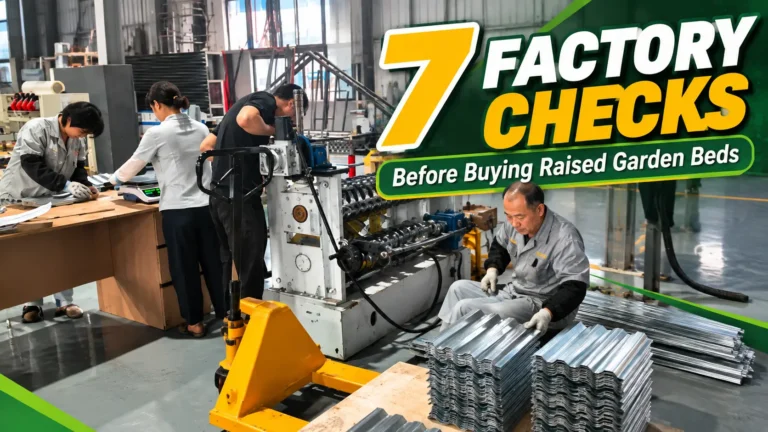
Formed metal panels organized during factory production. Production photographs establish context, but buyers should still verify specifications and inspection records for their order.
1. Start with One Comparable Raised Garden Bed Specification
Send every manufacturer the same written specification before comparing price. If one factory quotes thinner steel, a simpler paint system, fewer braces, basic cartons, or different hardware, the offers are not commercially equivalent.
Your request for quotation should identify at least the following:
| Specification area | Information to define |
|---|---|
| Product format | Oval, rectangular, round, modular, elevated, wheeled, or custom |
| Dimensions | Length, width, height, panel lengths, and dimensional tolerances |
| Steel system | Steel grade, nominal thickness, thickness tolerance, metallic coating type and mass |
| Exterior finish | Pretreatment, paint chemistry, front- and back-side film requirements, color, gloss, and tolerance |
| Structure | Corrugation profile, rolled edges, corners, overlaps, braces, drainage, and load assumptions |
| Hardware | Bolt, nut, washer, cap, brace, tool, and spare-parts requirements |
| Accessories | Rubber trim, liners, covers, trellises, irrigation, greenhouse frame, or wheels |
| Packaging | Carton structure, inserts, abrasion protection, labels, manuals, pallet plan, and test requirements |
| Commercial inputs | Order quantity, destination, Incoterm, target market, branding, and required delivery window |
Separate mandatory requirements from negotiable options. Material standards, safety details, carton limitations, and destination-market requirements normally belong in the mandatory group. Colors, accessory bundles, and some branding treatments may remain open during initial quotation.
Freeze the approved specification through a drawing, bill of materials, color reference, packaging specification, instruction manual, and revision number. Verbal decisions and chat messages are difficult to control once purchasing, production, quality, and packaging teams begin working from different versions.
For a detailed example of how coating, thickness, corrugation, hardware, and edge protection work together, see YardAve’s raised garden bed material specification guide.
2. Verify the Manufacturer and Its Production Scope
Confirm who will manufacture the product, which operations are performed in-house, and who is responsible when a process is outsourced. A useful factory review follows the product from incoming material through forming, finishing, assembly, inspection, packing, and shipment.
Ask each candidate to provide or explain:
- The legal company name, factory address, and export entity.
- The production steps completed at that location.
- Processes handled by approved subcontractors, such as coil coating or specialized testing.
- The quality team’s authority, inspection points, and record-retention process.
- Experience with the relevant product type, order volume, destination market, and packaging format.
- How drawings, samples, deviations, and engineering changes are approved.
For a new raised-bed supplier, separate company qualification from order qualification:
| Review area | Why it matters | What to collect |
|---|---|---|
| Legal and export entity | Confirms who signs contracts, invoices, and export documents | Business license name, invoice entity, factory address, export contact |
| Factory process scope | Shows whether the supplier controls the main risk points | Process list for cutting, forming, punching, assembly, packing, and inspection |
| Outsourced operations | Prevents hidden gaps in coating, testing, or packaging responsibility | Approved subcontractor list and responsibility boundary |
| QC authority | Shows whether inspectors can stop or rework production | QC organization chart, inspection checkpoints, escalation process |
| Document traceability | Keeps drawings, samples, and packaging from drifting between teams | Revision log, approved sample record, BOM, carton specification |
Company-level certificates can support supplier qualification, but they do not automatically prove that a specific raised bed complies with every product, material, or destination-market requirement. Check the certificate holder, issuing body, scope, standard edition, validity, and covered location. Then request the product-specific reports or declarations needed for the agreed market.
YardAve describes its outdoor product manufacturing and quality-control process on its company page. Buyers should still confirm the current documents and order-specific requirements during qualification.
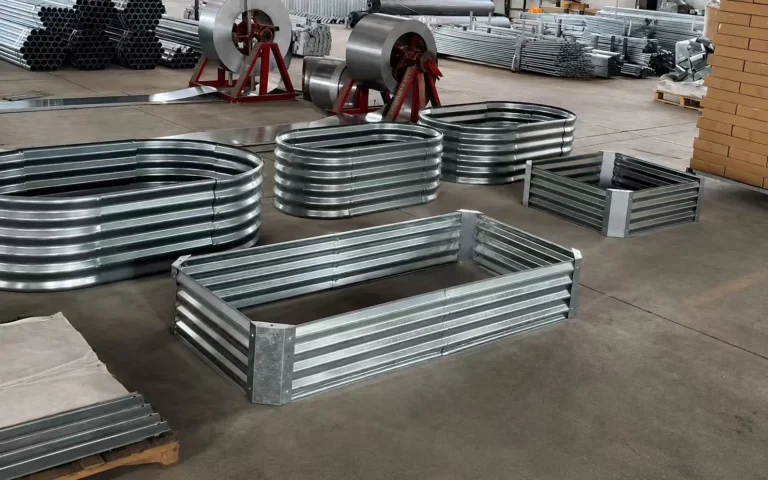
Custom metal planters in a workshop illustrate production range and finish consistency. They do not by themselves establish material grade, coating thickness, or compliance.
3. Verify the Quoted Product System, Not Only the Material
This article is not a material-selection guide; it is a manufacturer-selection checklist. The goal here is to confirm whether each factory can quote, sample, produce, inspect, and pack the same controlled product system. A quotation that says “galvanized steel raised bed” is not complete until the supplier also defines the drawing, forming method, edge treatment, fasteners, accessories, carton, inspection plan, and change-control rules.
When reviewing supplier quotations, ask for a side-by-side confirmation table rather than a general product description:
| Quote item | What the manufacturer should confirm | Evidence to request |
|---|---|---|
| Drawing control | Product dimensions, panel layout, hole positions, tolerances, and revision number | Drawing, bill of materials, approved revision record |
| Material system | Steel type, nominal thickness, metallic coating, paint or finish, and fastener compatibility | Material specification, mill document, coating or finish record where available |
| Forming and edge process | Corrugation profile, cutting, punching, folded edges, rounded corners, trim, and braces | Sample photos, in-process inspection points, finished sample |
| Hardware and accessories | Bolts, nuts, washers, tools, spare parts, rubber trim, liners, covers, or wheels | Packing list, hardware count, approved sample |
| Packaging | Carton size, inserts, abrasion protection, labels, manual, pallet plan, and loading method | Packed sample, carton specification, loading plan |
| Quality control | Incoming, first-piece, in-process, final, and outgoing inspection responsibilities | Control plan, inspection checklist, sample approval record |
This keeps the article focused on supplier evaluation and prevents a common sourcing mistake: comparing a detailed quote from one factory against a vague quote from another. For deeper material-selection logic, use the separate raised garden bed material specification guide.
Do not approve uncontrolled substitutions. A change in steel source, coating mass, paint system, fastener finish, trim material, carton construction, or assembly manual can affect appearance, durability, assembly, claims made to the final customer, and replacement cost. The purchase agreement should define which changes require written approval before production continues.
4. Approve Both an Assembled Sample and a Packed Sample
A flat panel can look acceptable while the assembled or packed product fails. The assembled sample reveals fit and customer-experience issues; the packed sample reveals abrasion, movement, missing-parts, labeling, and transport risks.
During assembled-sample approval, check:
- Overall dimensions and shape
- Hole alignment and panel overlap
- Panel bowing, twisting, or uneven top edges
- Corrugation and finish consistency
- Exposed sharp points or burrs
- Rolled-edge and corner quality
- Rubber-trim fit and continuity
- Bolt orientation, washer fit, and fastener access
- Brace position and connection strength
- Hardware count and spare-parts allowance
- Instruction sequence, tools, and realistic assembly time
The approved sample should be connected to the controlled drawing, bill of materials, color reference, instruction manual, and packaging specification. If the factory changes the product after sample review, update those documents rather than relying on an informal list of comments.
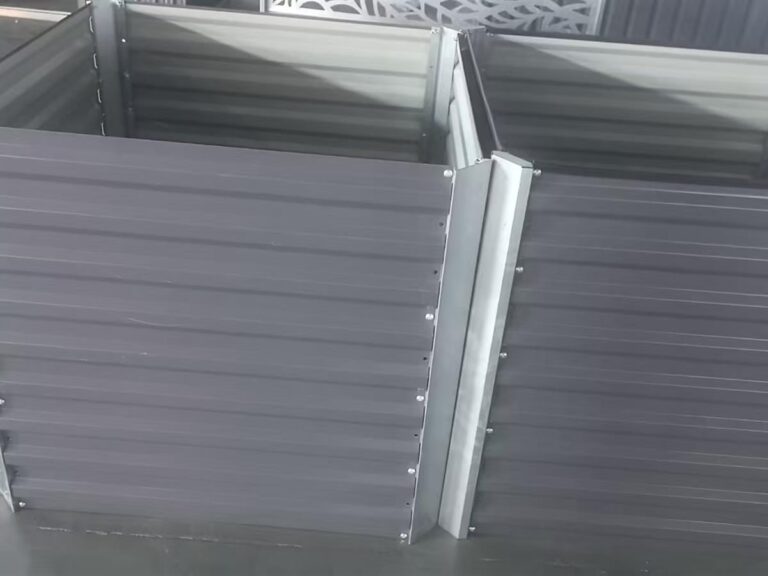
An assembled round raised bed sample allows the buyer to review panel overlap, fasteners, corrugation, edge trim, shape, and finish before mass production.
The packed sample should contain the real panels, hardware, instructions, labels, inserts, protective materials, and carton. Open and reassemble it after the agreed handling or packaging test. This confirms whether components remain protected and whether the customer receives a complete, understandable kit.
5. Audit Quality Control from Incoming Material to Shipment
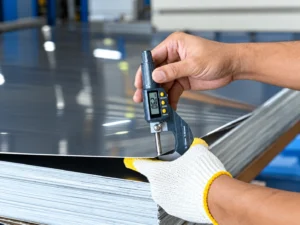
“Strict quality control” is useful only when the supplier defines what is checked, how it is measured, when it is checked, who records it, and what happens after a failure.
A practical control plan follows four stages:
| Stage | Typical raised-bed checks |
|---|---|
| Incoming quality control | Material identity, thickness, coating or finish documentation, hardware, trim, cartons, and labels |
| In-process quality control | First-piece dimensions, profile, hole location, forming damage, edge quality, color, and surface appearance |
| Final quality control | Overall dimensions, fit, assembly, hardware count, finish, accessories, instructions, and approved-sample comparison |
| Outgoing quality control | Quantity, carton condition, labels, pallet plan, shipping marks, documents, and loading readiness |
Turn important requirements into measurable acceptance criteria. Instead of “holes must align,” define the drawing dimensions and tolerance. Instead of “no scratches,” define the viewing conditions, defect categories, acceptable limits, and whether touch-up is permitted. Instead of “strong carton,” define the board or performance requirement, packed weight, closure method, and agreed test plan.
Third-party inspection can add independent visibility when working with a new supplier, approving new tooling, changing specifications, placing a large order, or responding to an earlier defect. It does not guarantee field performance. The inspection company still needs the latest controlled specification, sampling plan, test method, and acceptance criteria.
6. Evaluate Packaging and Logistics Before Comparing Unit Price
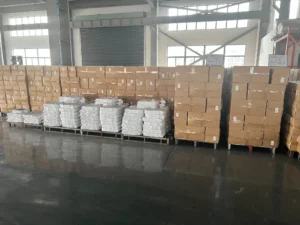
Packaging affects damage, warehouse labor, container utilization, customer experience, replacements, and reviews. It belongs in supplier selection from the beginning—not after the product price has been agreed.
Review the following with the packed sample:
- Separation between coated metal panels
- Protection at corners, edges, holes, and protruding hardware
- Abrasion and moisture-control measures suitable for the route
- Hardware bags, identification, and containment
- Instruction-manual placement and protection
- Carton dimensions, gross weight, hand holes, closure, and shipping marks
- Inner packs, master cartons, pallets, and container-loading plan
- Spare components and replacement-part identification
- Retail labels, barcodes, warnings, and market-specific information
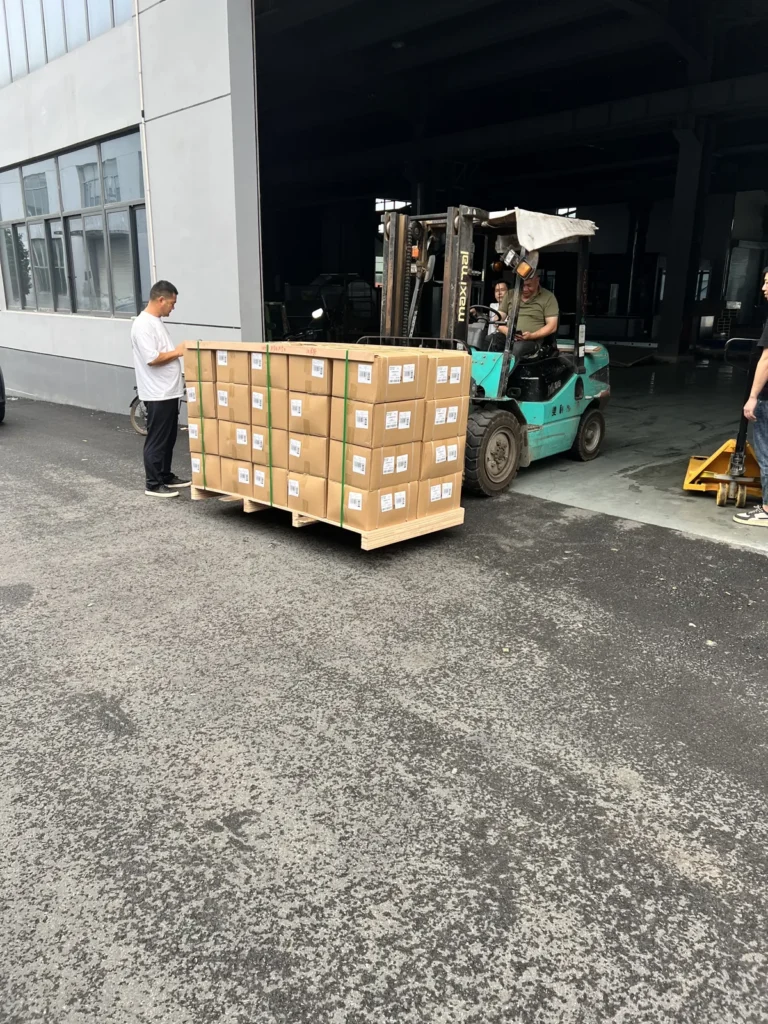
Packed cartons on pallets before shipment. Final approval should verify carton construction, contents, labels, pallet pattern, quantity, and handling requirements—not appearance alone.
Pallet handling is part of shipment readiness. The approved pack should remain stable and protected during internal movement, loading, and onward distribution.
Compare how many complete, protected units fit into the planned container, not merely how small a carton can be made. Excessive compression or insufficient separation may improve the theoretical loading quantity while increasing damage and repacking costs.
If a packaging test is required, record the packed weight, conditioning, orientation, drop height or compression method, number of cycles, pass criteria, and post-test inspection. A claim that packaging was “drop tested” is incomplete without the test conditions and results.
7. Check Capacity, Lead Time, Communication, and Change Control
Reliable supply depends on realistic scheduling and controlled changes, not on a supplier’s stated maximum capacity. Ask how the proposed order fits the factory’s actual line, labor, coating, assembly, packing, and material schedule.
Confirm these milestones in writing:
- Technical review and quotation validity
- Artwork, drawing, color, and packaging approval
- Sample production and courier time
- Material purchasing and production start
- First-piece or pre-production approval
- In-process reporting and inspection window
- Final inspection and corrective-action time
- Packing, booking, loading, and document release
Identify the commercial, technical, quality, and logistics contacts. Define how the supplier reports delays, material substitutions, drawing changes, or failed inspections. A small issue reported early can be managed; the same issue discovered after packing may affect the full shipment.
Capacity claims should be product-specific and time-specific. A factory may have substantial overall output but limited capacity for a particular forming profile, coating color, manual assembly step, or retail packaging format during peak season.
8. Normalize Quotations and Compare Total Landed Cost
Compare quotations only after normalizing the specification, quantity, packaging, Incoterm, and included services. A lower unit price can become the higher-cost program if it omits tooling, protective packaging, inspection, spare parts, export handling, or realistic warranty support.
Use a comparison table such as this:
| Cost or requirement | Supplier A | Supplier B | Evidence or variance to resolve |
|---|---|---|---|
| Product specification | Material, thickness, finish, structure | ||
| Order quantity and unit basis | Set, carton, configuration, or individual bed | ||
| Tooling and artwork | Ownership and future-use terms | ||
| Sample and courier | Refund or credit conditions | ||
| Retail/export packaging | Exact carton and insert specification | ||
| Inspection and testing | Included checks versus buyer-arranged services | ||
| Inland transport and export handling | Included under the quoted Incoterm | ||
| International freight and insurance | Same route and shipment assumptions | ||
| Duty, tax, brokerage, and warehousing | Destination-specific estimate | ||
| Damage, replacements, and warranty handling | Agreed responsibility and process |
The purpose is not to predict every future cost perfectly. It is to expose differences before they are mistaken for supplier efficiency.
For current YardAve product formats, see the range of wholesale metal raised garden beds. Final quotations should still be based on an approved specification and destination.
9. Use a Four-Gate Manufacturer Selection Checklist
The following process creates a clear approval trail and prevents later stages from compensating for unresolved earlier risks.
Gate 1: Document qualification
- Confirm the legal entity, production location, process scope, and responsible contacts.
- Issue one RFQ specification to all candidates.
- Review drawings, bill of materials, material documents, certificates, commercial terms, and change-control rules.
- Record open points instead of assuming that missing details are included.
Gate 2: Sample approval
- Inspect the assembled product and customer assembly experience.
- Inspect the fully packed sample and all contents.
- Record dimensions, appearance, fit, hardware, instructions, packaging, and changes.
- Freeze the approved documents and reference sample.
Gate 3: Production verification
- Approve incoming-material and first-piece checks.
- Monitor critical forming, finish, assembly, and packing controls.
- Review inspection records and corrective actions.
- Require written approval before controlled components or processes change.
Gate 4: Shipment readiness
- Complete final inspection against the latest approved specification.
- Verify quantity, cartons, labels, manuals, pallets, and replacement parts.
- Confirm shipping documents, booking, loading plan, and release conditions.
- Keep the inspection and shipment records with the purchase-order file.
A completed container load should match the approved loading plan, carton count, weight distribution, restraint method, and shipment documentation.
Common Manufacturer-Comparison Mistakes
Comparing quotations before specifications. Price appears precise even when the included product is not. Issue the same RFQ package first.
Approving only an attractive sample. A showroom sample may not reveal packing, instruction, hardware-count, or repeatability risks. Approve an assembled sample and a packed sample tied to controlled documents.
Treating certificates as universal product approval. Check the holder, scope, location, validity, test sample, and destination requirement. Request product-specific evidence where needed.
Leaving packaging until the end. Late packaging changes can alter cost, lead time, container quantity, and damage risk. Include packaging in quotation and sample approval.
Selecting by unit price alone. Normalize included services and estimate landed cost, quality risk, and replacement handling before deciding.
Frequently Asked Questions
Should I buy from a raised garden bed factory or a trading company?
Either model can work if responsibilities are transparent. A factory can provide direct production access; a capable trading company may coordinate multiple factories or product categories. Verify the legal seller, actual manufacturer, inspection responsibility, pricing scope, communication path, and change-control process rather than choosing by label alone.
What documents should a metal raised garden bed supplier provide?
The package depends on the product and market, but commonly includes controlled drawings, a bill of materials, material or coating information, color reference, hardware list, instruction manual, packaging specification, inspection plan, commercial quotation, and applicable product-specific reports. Request only claims and documents relevant to the approved specification and destination.
What should I inspect in a pre-production sample?
Check dimensions, shape, fit, hole alignment, edges, finish, hardware, braces, trim, accessories, instructions, assembly time, carton contents, protection, labels, and post-handling condition. Record every approved change in the controlled product and packaging documents.
How can I compare two supplier quotations fairly?
Normalize the product specification, quantity, packaging, Incoterm, tooling, samples, inspection, export handling, and service scope. Then compare the estimated landed cost and unresolved risks. Do not fill missing quotation details with assumptions.
Build the Supplier Decision on Evidence
A dependable raised garden bed program begins with comparable inputs and ends with traceable approval. Define the specification, verify the manufacturing scope, approve assembled and packed samples, apply measurable quality controls, review packaging and logistics, and normalize landed cost before selecting a supplier.
YardAve manufactures raised garden beds for wholesale, distribution, retail, private-label, and project programs. To request a specification-based raised bed quotation, provide the product format, dimensions, material and finish, estimated quantity, destination, branding, packaging, compliance needs, and required delivery schedule.
About the author: Edison Wang writes about outdoor-product manufacturing, B2B sourcing, product specifications, quality control, and export preparation for YardAve. Technical and compliance requirements should always be confirmed against the approved product specification and destination-market documentation.
Technical review: Lily Wang reviewed this article for technical clarity and consistency with the available YardAve product information. Order-specific performance and compliance requirements remain subject to the final approved specification and supporting documents.